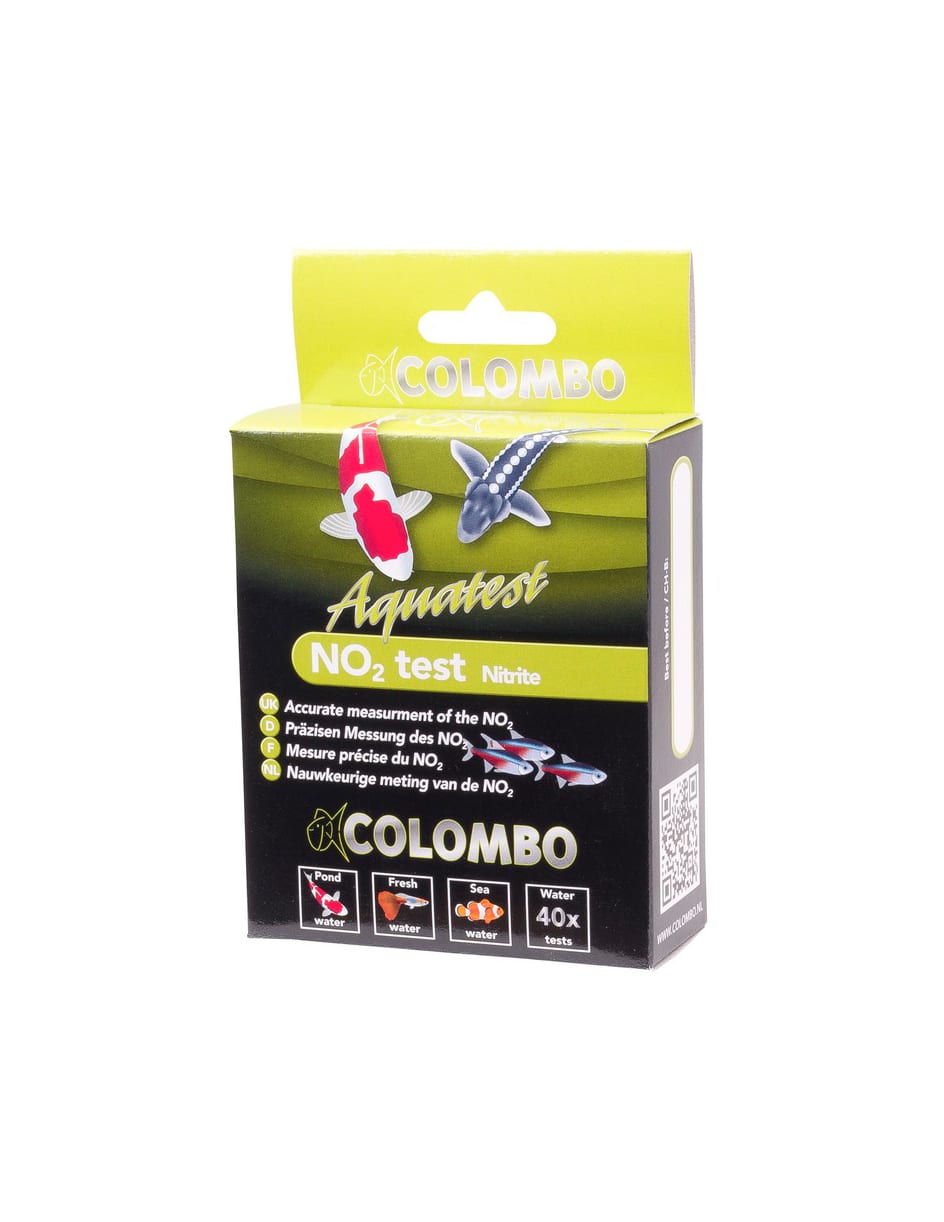
Nitrite is one of the biggest and most underestimated hazards to our Koi!
It’s not so much the short term impact Nitrite has, but the fact that because in new systems especially elevated levels can persist literally for months and medium and long term exposure to high levels of Nitrite can be especially damaging to all Koi but, as we’ll explain later, especially so to young and female Koi in particular.
The Problem
Nitrite is an especially sneaky adversary because it’s pervasive and always present. It’s always present simply because of the nature of Koi systems and like many challenges is almost impossible to eradicate so the realistic objective is to manage it, and to manage it effectively.
Nitrite is a chemical produced during the process of converting ammonia to Nitrate and thats why its omnipresent. In all Koi ponds ammonia production is an ongoing process and as ammonia is essentially food for nitrite that’s the reason its always present. Nitrite is converted to much less harmful Nitrate by a group of bacteria called Nitrobacter. The problem is of all the bacteria in our filtration systems Nitrobacter are the easiest to kill, and take the longest to develop and establish.
So for example, if we look at new maturing systems, all the vital bacteria are constantly competing with each other for survival, three guesses which does least well? The consequences for we Koi Keepers and our Koi, is constantly fluctuating water parameters with often scary reading spikes and persistently high Nitrite readings. High = +50ppm = +O.50 on your reagent test kit.
Understand What you’re dealing with
As with all things in Koi ignorance is never bliss, and monitoring and testing is the vital link that helps us identify and solve problems. While Nitrite is no different and it is important to know what you are dealing with, remember Nitrite is irrevocably linked to other parameters, specifically ammonia.
Testing is not just important it is vital. Not only do you need to know what you’re dealing with, but how much. Koi are fortunately much more adaptable than we often give them credit for, and they will adapt to adverse conditions, but there is a limit. Given that we understand little about what these limits actually are and that they differ from one individual Koi to another, its much more advisable to “err of the side of caution” and if your Nitrite levels exceed 50ppm – do something about it! Maintaining levels below 50ppm/0.50 and preferably below 25/0.25 should be your objective.
The Consequences?
Because Koi are not a species that have been subjected to much science, most of the available data is at best empirical. So we have used our combined experience to offer up some information that although we can’t support with direct science, we can back up with all our combined experience, we’ll leave you to decide its validity.
While the consequences of elevated Nitrite levels may be anecdotal the process it results in, is not. Depending on a variety of factors Nitrite impedes and prevents the absorption of oxygen into Koi’s bloodstream. At low levels, this can impact on development and fertility, and at high levels it can kill Koi very quickly. This is the case even if you have taken our advice on oxygen saturation levels, because in such circumstances it is not that there isn’t enough oxygen, it’s simply that Koi in elevated Nitrite conditions are unable to absorb it, because their O2 absorption processes have been compromised by Nitrite.
Most of us also all have another two kinds of Koi. The first is that Tategoi superstar that started off with all the promise in the world, but just never did quite do what we hoped it might? Then there’s that sickly individual that not only always gets everything first, but also gets it worse than the rest, and eventually succumbs to some random ailment that didn’t even bother the other Koi.
…Ring any bells?
Now, of course, you bought the Koi from a dealer so we get the primary blame. Then when everyone’s got over the initial shock and started to think about it, we all blame the breeder. The reality is that the supply chain might be part of the problem, but then why are none of the other Koi affected?
Coincidence doesn’t have much of a role in Koi Keeping in our experience, and if we defer to our prime directive – Water Quality is everything, perhaps the real culprit begins to emerge?
Nitrite is responsible not so much for the death of many Koi, but is it the cause of sick Koi syndrome and for Tautog transforming into tatty Koi – absolutely it is! This doesn’t let any other perpetrators off the hook, but it is our experience that Nitrite is one of the unsung, unidentified problems we have, that actually cause many more problems than it ever carries the can for!
What to do about it?
In commercial fish farms this is such a problem, especially in those rearing fry and growing fish, that separate filtration systems are used. Anaerobic by-passes are widely used in commercial fish farms but are generally impractical in Koi systems, and the reality is we have few remedial options.
But we do have some.
The first is…us. By upping our Koi husbandry game and specifically reducing the level of organic material in our systems we can reduce ammonia levels and deprive Nitrite of its primary food source. This isn’t a problem for the rest of our systems filtration functions, as there is always enough ammonia in Koi systems, the problems start when there’s too much, and the problem isn’t just the ammonia itself, but the excess Nitrite that it results in.
The second remedial option is water changes. The nature of the Nitrite problem is much better served by a constant trickle than it is by a big water dump. Significant water changes by definition can change things significantly when it comes to our Koi nothing significant or quick, is generally beneficial. Gradual is better!
The third option is to utilise some science. There are various ion exchange materials we can use to reduce Nitrite indirectly. The Zeolites are theoretically useful in this regard as they will absorb ammonia and hence reduce the Nitrite food source, the problem is they’re relatively inefficient so you need a lot, and they require a saline recharge from time to time. But they are useful if you have for example a spare Bakki shower shelf or spare end chamber.
Finally, we’ll leave you with some words of wisdom from our owner!
PLEASE don’t ignore or underestimate Nitrite… while it will not so much bite as constantly nibble your backside, the results the same – a big pain in the bum!…. Paul White