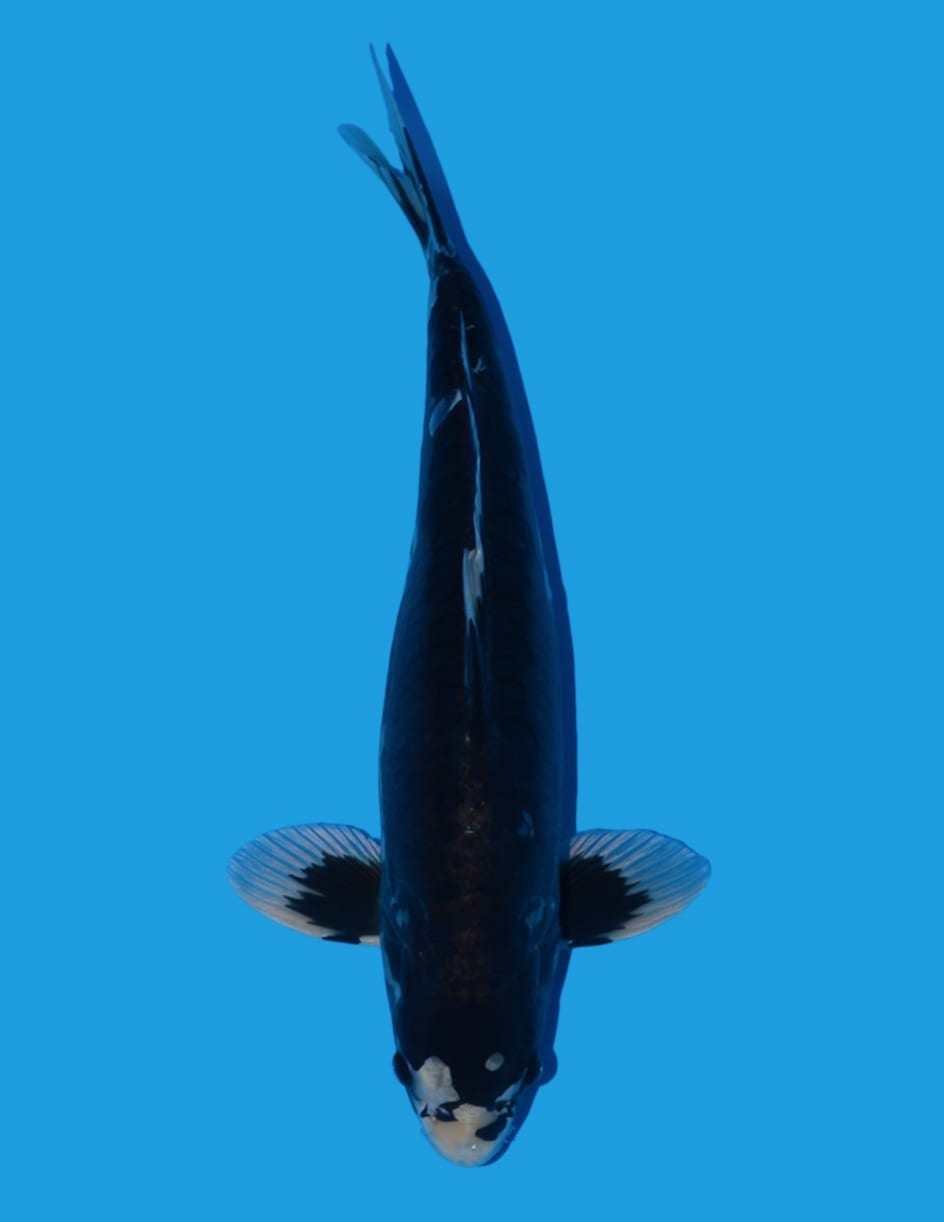
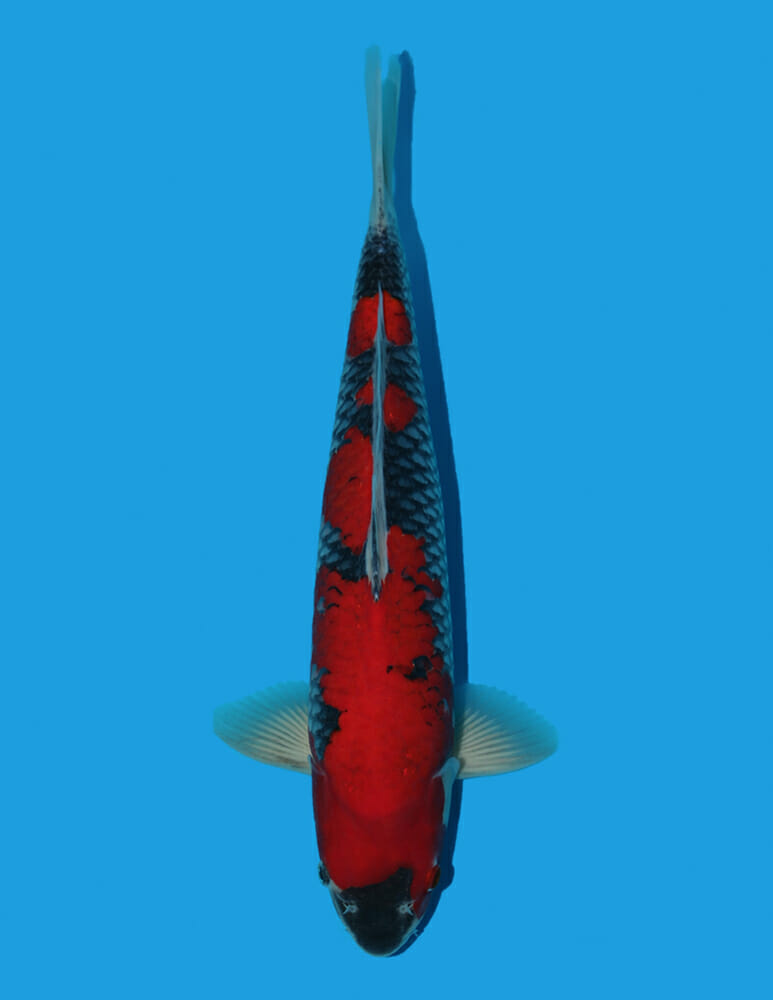
Here’s the definitive list of specific constituent varieties that are collectively Kawarimono class.
Karasugoi, Hajiro, Hageshiro, Yotsushiro, Sumi Nagashi, Matsukawabake, Kumonryu,
Beni Kumonryu
Kikokuryu, Beni Kikokuryu, Kin Kikokuryu (non metallic variants only)
Goshiki
Chagoi, Kigoi, Soragoi, Benigoi, Shiro Muji
Midorigoi,
Aka Hajiro, Benigoi, Aka Muji
Magoi
Ochiba Shigure
Kanoko Kohaku, Kanoko Sanke, Kanoko Showa
Kage Showa, Kage Shiro Utsuri, Kage Hi Utsuri
Aka Matsuba, Ki Matsuba, Shiro Matsuba
All Kin Gin Rin and Doitsu examples are also included in this variety, plus….Guessagoi = all the wierd and wonderful non metallic combinations of any or all the above!
Kawarimono classification in many ways is a reflection of the wider topic that is Nishikigoi;
always complex, often confusing, sometimes contradictory and it can take you a lifetime to
understand. It’s not even the fact that there are almost fifty individual , but often very similar
varieties, but more the variations within them. Not only are these variations often very subtle and even minor, but they’re also often very hard to spot, making Kawarimono perhaps the class that draws the most ID mistakes.
For many this complexity results in frustration, while for others its that very fascination and
difficulty of the challenges makes it all the more worthwhile, and inspires them, all depends on your personal perspective. So for the former this is intended to be a simple reference guide that can be referred to help you along your journey, and for latter its intended not so much as a definitive listing, there are already loads of those, but more to inspire you to dive into the topic head first and really get to know Kawarigoi!
For those of you who’ve persisted with our information resource you’ll know by now we have a not so secret secret learning weapon – split it up! Dividing a large topic into smaller bits, in this case three smaller bits, often helps us actually start to understand the bigger bit! Kawarimono is perhaps the defining example of how this works (or not) in practise, so here we go!
Historically, and no self respecting show organiser, benching team or Judge will ever agree with this but the fact is whenever there was variety ID issues with non metallic Koi – Kawarimono was the class it got benched into. There have been some glaring examples of ID errors over the years and to be fair its easy to look back and correct them because it wasn’t us doing the on the ground under pressure decision making in the first place. The point is, if experienced benching teams and even Judges can make mistakes don’t you expect to get it right all the time, you wont. Mistakes are all part of the learning process and in this case easily corrected and often very helpful to the overall process.
Single Coloured Koi
Many Kawarigoi are single coloured. To help you quickly learn to categorise them if they’re single coloured and non metallic – they’re Kawarimono. That might be simple but often giving them a definitive individual variety class often isn’t, and before you consign this to the done list, there is a complication. Its often the case that Koi display areas that make them partially metallic, we’ve even seen Koi that are half metallic and half non metallic. Don’t despair there is a solution to the metallic/non metallic conundrum. If theres any metallic skin present its not Kawarimono.
To take a simple example; a metallic Shiro muji = Purachina – Hikarimuji.
A less simple example; a metallic Goshiki = Shochikubai Goshiki = Hikarimoyo
Two coloured Koi
Many of the Koi included above also present with the addition of white skin and these also go into Kawarimono class except this time being non metallic isn’t enough and its only if they’re: non metallic and don’t specifically qualify to go into a classification of their own. Kohaku are an example of Koi that partially qualify; they’re two coloured and non metallic but of course already have their own class. By contrast Kumonryu for example are also two coloured and non metallic but don’t already have their own class, so they’re in Kawarimono.
Patterned multi coloured Koi
Same criteria applied here as for two coloured Koi, except this is where it get really interesting and not just because it contains Kanoko and Kage, but more so because it encapsulates the complexity challenge that is Kawarigoi.
Kawarigoi is the collective term for Koi contained in Kawarimono classification.
By staying focussed on the fundamental qualification for a Koi to be a Kawarigoi = non metallic, and not getting drawn into specific details of for example pattern the whole task becomes less
difficult. Its also the case that some debates are more important than others. While it is
important, for example, to establish whether a Kage Showa or Kanoko Sanke are actually Kage or Kanoko or just have less developed sumi, because that outcome puts them in completely different classes than it is to decide if a Koi is a Hageshiro or a Hajiro which either way put them in Kawarimono.
There are few other aspects of Koi variety ID where staying focused on the fundamentals is more important, and so doing will make not just Kawarimono much less difficult but all the rest too.