Designation: Monogenetic trematodes
Scientific reference: Dactylogyrus
Common Name: Gill Fluke
Mechanism of reproduction: Internal egg Layers
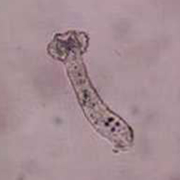
Designation: Monogenetic trematodes
Scientific reference: Gyrodactylus
Common Name: Skin Fluke
Mechanism of reproduction: Internal Livebearers

We’ve included both these together because although they are separate parasites they are of the same genus, and more importantly from a Koi Keepers point of view, they have many similarities and crucially are managed using the same protocol.
Although it’s technically correct to deal with them separately we are more focussed on practicalities and in our experience, the simpler the better!
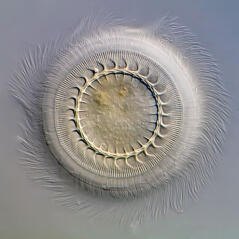
Flukes are especially nasty little tinkers. They have a mouth, eyespots and anchoring hooks on their posterior. They have direct fish-to-fish transmission, and life cycle. Although they’re referred to as Gill and Skin/Body flukes they are all just as happy on the main body of the Koi on as they are on the gill filaments (lamellae).
Flukes are hermaphrodites which means they have both male and female reproductive sex organs. This is especially problematic for us because it means that a pond with zero parasites only needs the introduction of a single organism – a solitary fluke to initiate carnage. The even worse news is that depending on the water temperature every adult is capable of laying up to 20 eggs per hour! The eggs only take 4-5 days to develop and hatch, so it doesn’t take long before a small fluke issue becomes a big infestation. It also means that because of their relatively complex life cycle, they are difficult to eradicate.
It’s also impossible to identify flukes without the use of a microscope, so anyone who tells you they don’t need a microscope and have the experience to just know, either doesn’t have enough experience or is just a smart alec – either way, YOU NEED A MICROSCOPE TO IDENTIFY FLUKES – QED!
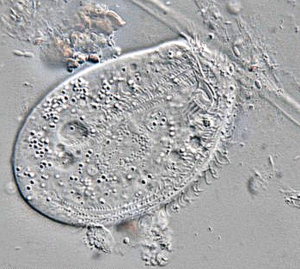
The nature of flukes is that they have a tendency to cluster, so it’s important to take several scrapes and check them all carefully as some of your scrapes may reveal none, while others have lots. The better news is that they are relatively easy to spot and identify and you need only relatively low levels of magnification to spot them. X40 usually does the job, and in our experience the maximum required is X100.
The bad news, however, continues because flukes function in extreme temperature ranges as low as 6˚C , and there’s no known upper limit to their operating range of temperatures. Because flukes are egg-laying parasites, treatment for them is difficult because none of the available treatments is effective on the egg stage organisms. Newly emerged flukes are fully free-swimming smaller versions of the adult and need to attach to a host within around 24 hours or they die, but once hatched they very quickly start the reproduction cycle and quickly produce and spread eggs. It’s also important to understand that in cold conditions adult flukes and their eggs can lay dormant for up to six months. That also explains why springtime as water temperatures increase, we often see an increased incidence, although flukes are not especially spring prevalent. That might sound less bad news, but it’s not really and just means you have to pay attention all the time for flukes!
Skin flukes (Gyrodactylus) differ from gill flukes in that unborn fully formed embryo are contained inside the adults a kind on onboard egg-laying machine, so in one adult skin fluke there can often be seen several generations of fluke, one inside the other. Both skin and gill flukes will, if conditions are right, find a host and start reproduction and usually live for about a month and then die, but of course, by then the population of flukes have exploded and increased exponentially.
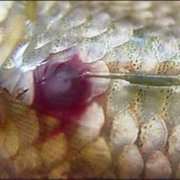
Both types of fluke have a serious set of grippers which are laced with pathogenic bacteria, so as the fluke moves around and secures itself on the host the hooks will puncture the surface of the Koi’s skin or gill lamellae so in addition to the physical damage, aggressive pathogenic bacteria is also injected into the Koi causing aeromonas/pseudomonas infection. These are the causative pathogens of both ulcers and bacterial gill disease. Both are especially problematic because by the time we realise we have them they’re already beyond treatment. So flukes can be a death sentence to our Koi, reason enough to take them seriously, as if we didn’t already have enough!
How many is too many?
In the case of flukes, the answer’s very simple – if you can count more than one on your slide, you need to act and deal with them!
What’s the treatment?
Before we get to the details of how and what to treat flukes with, it’s vital to understand that the life cycle of both Gyrodactylus and Dactylogyrus is such that a single treatment alone will not eradicate gill fluke, so we must deploy multiple sequenced treatments. The treatment timing is determined by the water temperature because that determines the rate at which adults produce more adults. But don’t forget we can’t kill the eggs, so we need to target adults, juveniles and emerging hatchlings which we can kill, but will all be such at different times, hence the need for multiple treatments.
Treatment is problematic for other reasons. Not least of which is the fact that all of the most effective fluke treatments are organophosphate based. From Masoten in the good old days, to more recently Superverm developed for use on sheep and cattle so not licensed for fish, let alone Koi, and all are now banned. Of course, the genius regulators are much quicker to tell us what we can’t use than what we can, so working within the regulations is a big challenge that’s been risen to by manufacturers who now offer a range of fluke treatments.
It’s absolutely vital that you follow the manufacturer’s instruction to the letter. Also, take note of advisories especially relating to kH & pH as some have minimum levels, which can be dangerous if not complied with.
In no circumstances deploy any treatment unless you have measured the volume of your system with a flow meter and know the EXACT gallonge/literage of your system. Don’t guess because if you do there’s a high probability that you will kill all your Koi… but on the plus side at least you won’t then have to worry about the flukes; Oops did we say that out loud!
Back to the serious stuff… because flukes are also genetically sneaky, they have another couple of tricks up their sleeves you need to know about. First, they are capable of developing resistance to treatments so its important to mix it up and rotate treatments to avoid this. Second, their eggs are sticky and often secreted in dark quiet corners of your system, including filters, making it especially difficult for treatments to get at them. Don’t assume just because you’ve dosed your pond you’ve got them all, check, and check again, and keep checking.
Finally, never ever underestimate flukes. They will kill your Koi directly or indirectly, and at all water temperatures – they are a serious problem, so deal with them seriously!
Treatments For Flukes
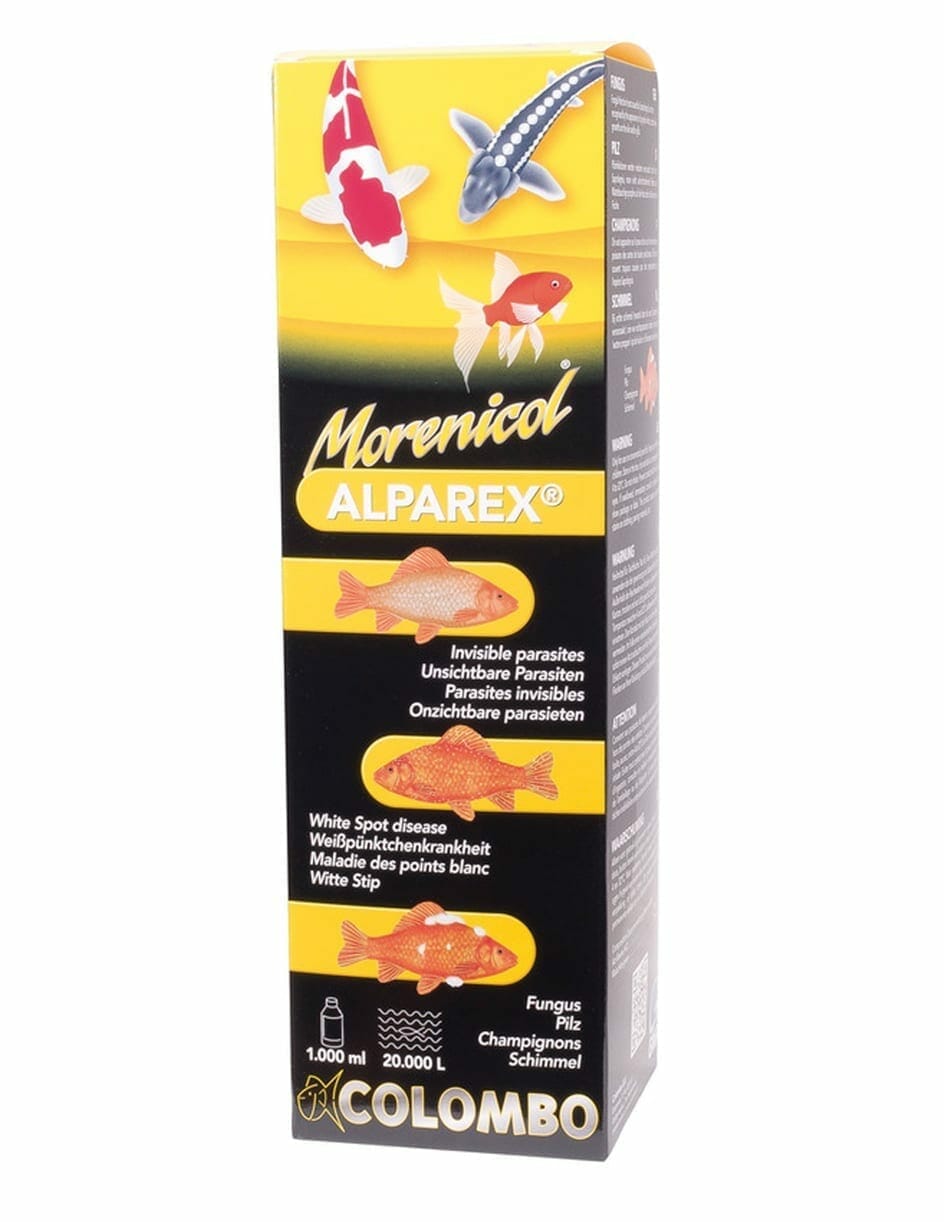
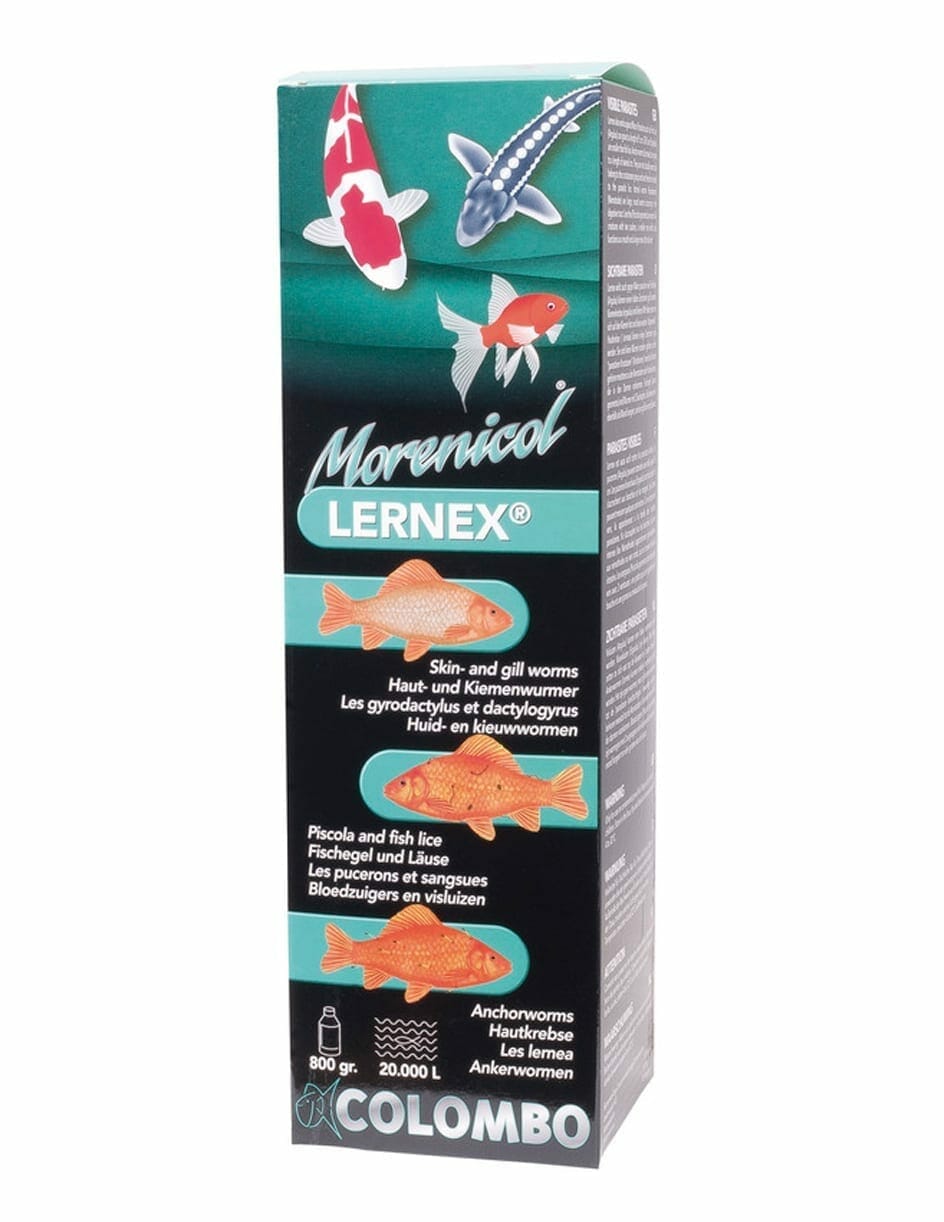
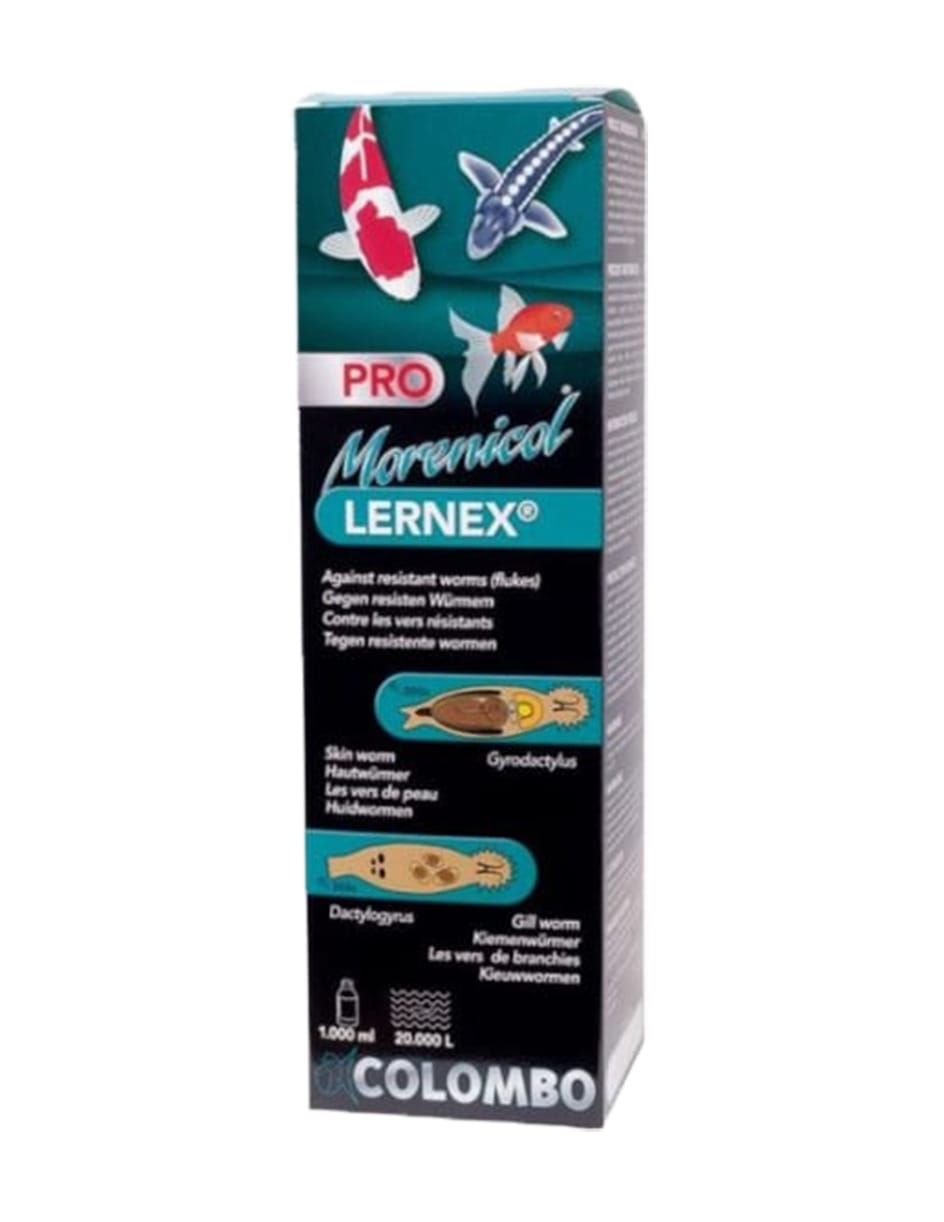
There are many treatments available for Gill and Skin Flukes, and as mentioned above it’s advisable to rotate treatments. The treatment we’d recommend firstly is Lernex manufactured by Colombo, this treatment we use in our quarantine protocol with all newly imported Koi.
Colombo Lernex – Fluke Treatment


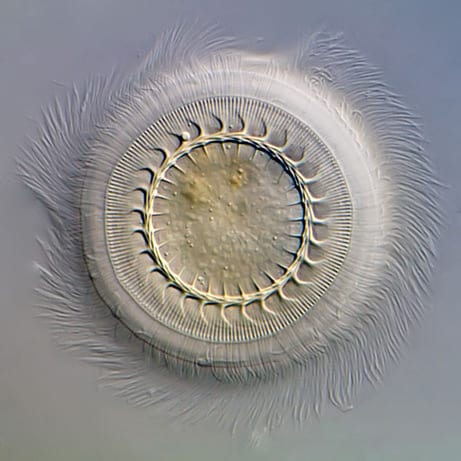
 Parasites are a major primary cause of health issues with our Koi. Inorder to minimise the risks they pose, its important to know what they are, what they look like, and how to manage them.