Nitrate – Worth the effort?
One of the questions which a lot of people have asked is, “Why bother?” After all, there is no evidence that levels of nitrates in excess of 100 mg per litre (even up to 1,000 mg per litre) are at all harmful. This is quite true. However, these tests were carried out on commercially farmed fish destined for the table, whose life span is, of commercial necessity, short. These tests bear little relevance to the longer lifespan (hopefully) enjoyed by Koi, and do not take into consideration the difference between short exposure to high levels, and long term exposure to lower levels.
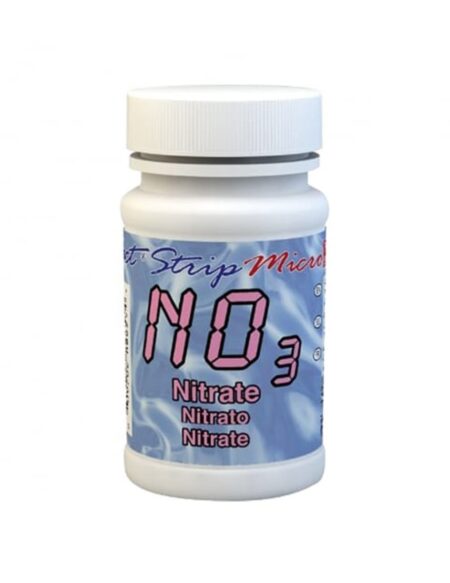
Despite warnings on nitrate test kits, advising not to go over 50 mg per litre (= 50 parts per million), and certainly not over 100, almost no-one sees nitrates as a real problem, or bothers to tell us why? Time and time again I was told that nitrates were harmless, even at hugely elevated levels. How much of this is more to do with the impact of Nitrate on our Koi and the fact that we couldn’t do anything about them, remains contentious. So what’s the actual problem with Nitrate and how much is a problem?
It’s important to say at the outset all the available science relates to fish farming and aquaculture and not to Koi so it’s important to keep that in mind, but those studies have shown that nitrates taken into the gut are reduced there to produce nitrites, and this has been implicated in mortalities. This constant dosing of the gut with nitrites and their absorption into the body may well have harmful effects, which are well documented in fish farming, and likely to be problematic for Koi also and in particular exposure to chronically high levels (>100mgl)
The problem is that there are no funds to study long term exposure to nitrates, as the only fish deemed worthy of such expenditure are commercially reared food fish whose lives are kept as short as possible. Their attitude was that for long term exposure, it would definitely be better if nitrates were kept well below 50 mg, and if possible, below 20 mg per litre.
We do know that nitrate interferes with our Koi’s ability to absorb oxygen, it is less definitive at what level?
While most pragmatic Koi keepers are content with keeping a watching brief on nitrate levels in their Koi systems, it remains one of the more difficult elements to proactively manage. Designing, operating and proactively maintaining effective filtration remains our first line of defence and in most cases avoids any real nitrate issues in the first place. We do have a Plan B in the form of specialist trickle towers and aerobic bypasses, but normally any issues can be resolved using more a conventional approach, either way.