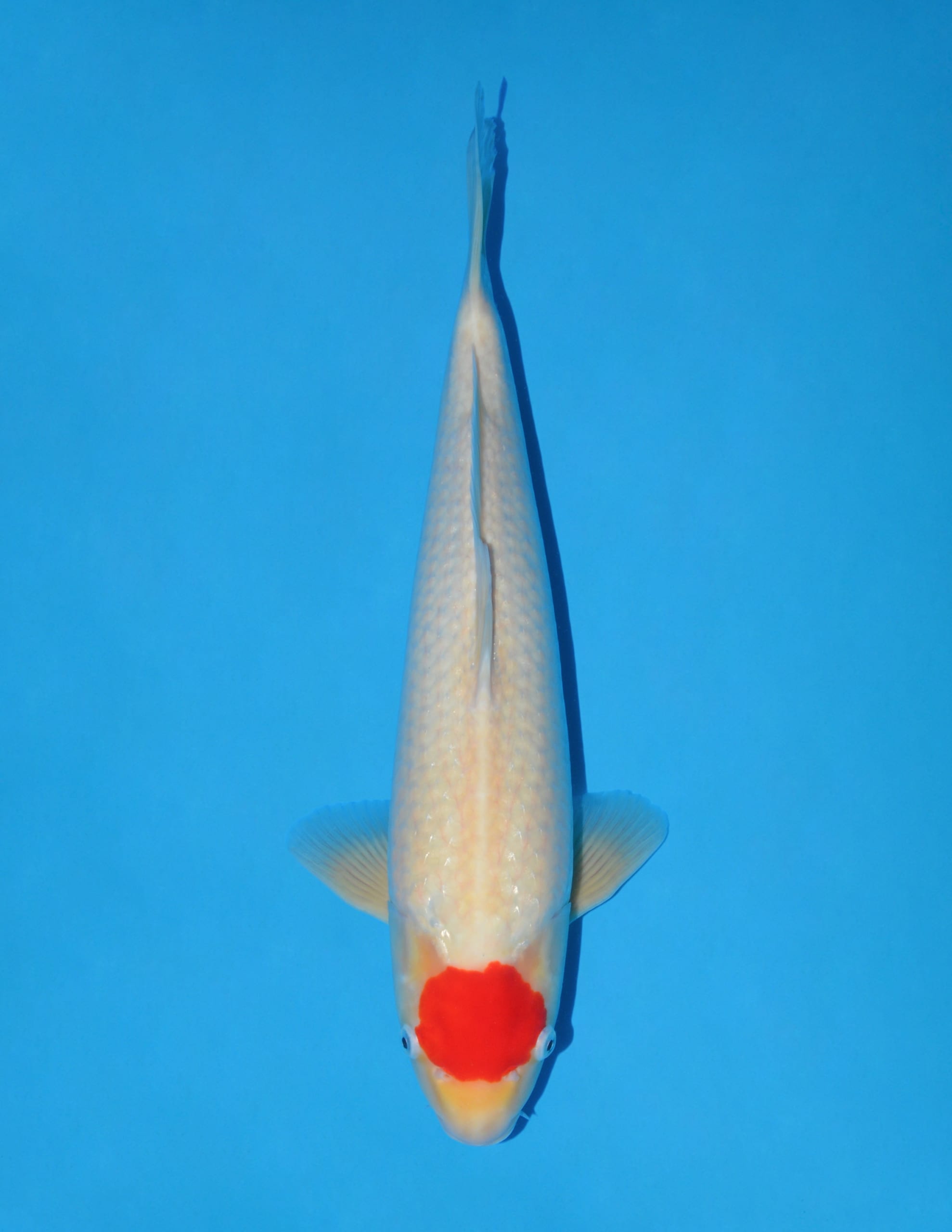
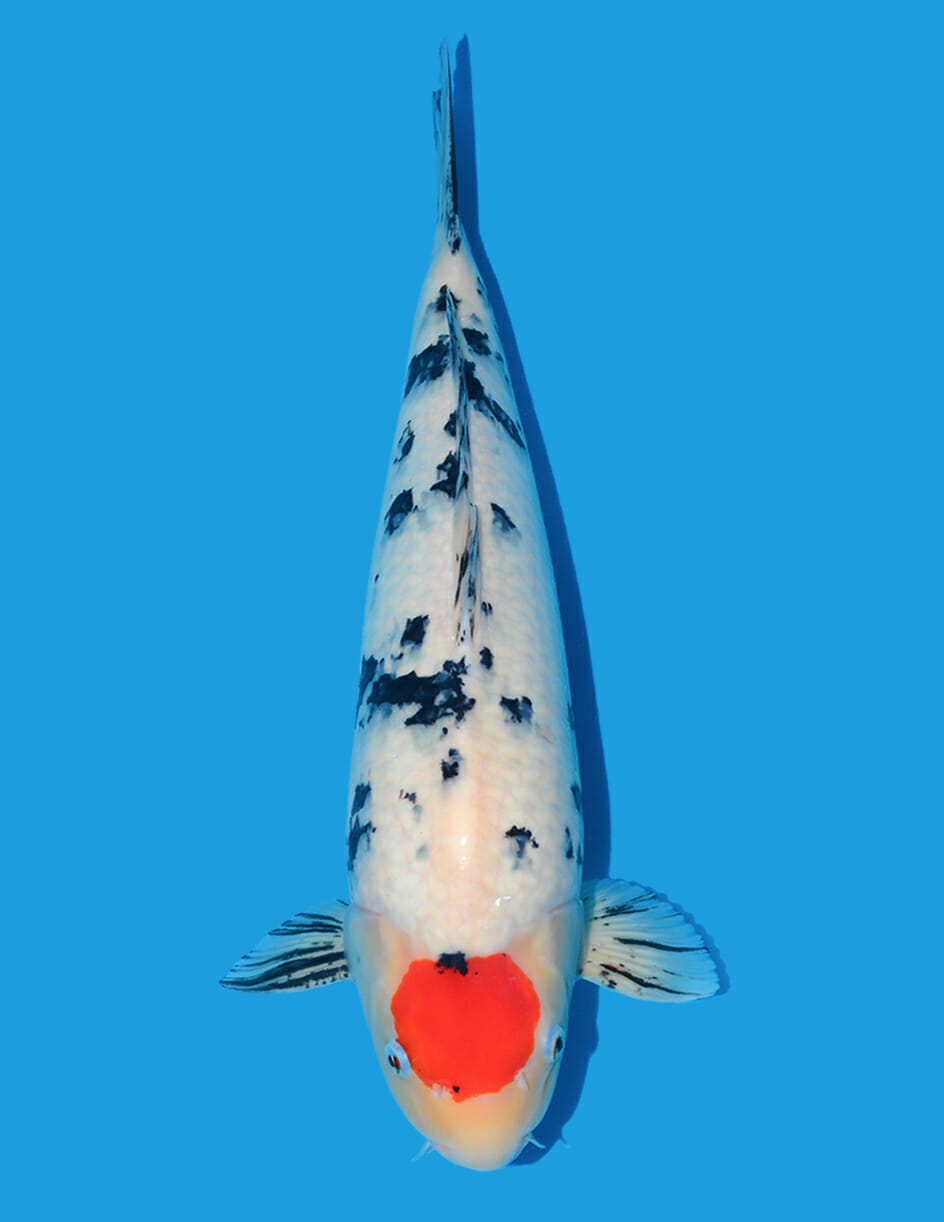
All other Koi displaying a Tancho spot on the head are classified by their main variety class. For example Tancho Kujaku = Hikarimoyo, Tancho Goshiki = Goshiki etc.
Gin Rin variants are included in Kin Gin Rin. All other Koi displaying the Tancho head spot feature go into their own variety of class. Hence Tancho Kujaku = Hukarimuji, Tancho Goshiki = Kawarimono.
In Japan, however, the Tancho classification is strictly restricted to Go Sanke examples of Tancho; Tancho Kohaku, Tancho Sanke and Tancho Showa.
Although this classification tends to be dominated by Tancho Kohaku, the Kohaku domination is not as strong in this class as it is in others and Tancho Sanke and Showa are also very highly regarded. In the UK Tancho are especially popular, and sought after and good examples of this exacting variety are, even today, hard to come by.
Head Pattern
The defining element of all Tancho is the head spot. In shows its the Tancho spot that determined placings, with all other elements being secondary. That’s why at some shows, winning Tancho with perfect Tancho spots, but perhaps lacking bodies prevail. For regular enthusiasts looking for a longer-term experience, it’s important to consider the Tancho spot in the context of the overall Koi, and not just a single element. Although there are no standards per se, Tancho is the single variety that comes close to such. Perfectly round and located centrally, not offset or forward, or backwards is the show variety requirement.
Colour
Colour homogeneity and consistency is vital for all Tancho, and it’s important that close attention is paid when considering all Tancho. It’s also important to remember that Tancho are not bred as Tancho per se, and that they are all derivatives of Kohaku, Sanke or Showa. As this is a recessive genetic trait, they are by definition less stable, which is why it’s especially important in inspecting them closely, to avoid subsequent shrinkage or even disappearance of the Tancho spot, unfortunately this is far from unheard of, and is not only why it’s important for your “Tancho” but also by paying attention to other elements like skin quality, sumi, and body shape, you at least have some insurance.
Body Shape
We have discussed at length the importance of body structure, and in all Tancho it’s even more important given the unforgiving nature of the variety.
Provenance
Because Tancho are popular but also relatively supply limited, a whole mini-industry have grown up in less scrupulous minority breeder circles. These Tancho factories specialise in acquiring low-quality Tosai with good front ends, and then they surgically remove the rest of the Koi’s beni! There’s a high mortality rate to this barbaric but profitable practice, but the Koi that do survive are often “too good to be true” Tosai and Nisai Tancho that look great as young Koi, but quickly deteriorate and often develop secondary beni (returning) and often very poor quality patchy beni, completely compromising their erstwhile Tancho status!
These sources are well known to the industry, and we obviously avoid them totally. However, they are still available and for sale in the UK, so it’s important that you are aware of this, and know where your potential Tancho originate, so you have some guarantee that their provenance is genuine.